
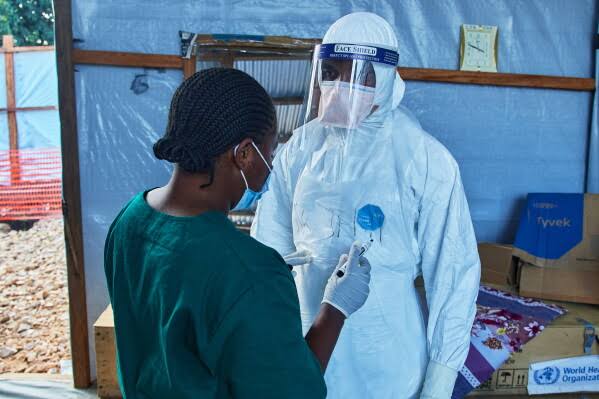
The Ebola outbreak in the Democratic Republic of the Congo is continuing to worsen, with health officials and aid agencies warning that the virus is spreading into new areas and moving closer to neighbouring South Sudan.
According to the Congolese government, confirmed cases of the Bundibugyo strain of Ebola have risen to 1,963, including 719 deaths, as of July 12. The outbreak has now spread across five provinces: Ituri, North Kivu, South Kivu, Tshopo and Haut-Uélé.
The International Rescue Committee (IRC) says the outbreak has not yet peaked, with transmission accelerating in existing hotspots while new infections are being reported farther from the epicentre in Bunia. The emergence of cases in Kisangani, more than 500 kilometres west of Bunia, has raised concerns that the virus could spread along the Congo River to major cities, including Kinshasa.
Health officials are also closely monitoring the situation after two Ebola cases were confirmed in Wamba, Haut-Uélé Province, near the border with South Sudan, increasing fears of cross-border transmission.
“The risk to South Sudan is particularly alarming. If Ebola crosses the border, it could spread silently before being detected, making the response far more complex and putting countless lives at risk,” said Bob Kitchen, Vice President of Emergencies at the International Rescue Committee.
The World Health Organization estimates there is a 70 percent likelihood that the virus could spread into South Sudan. Although contact tracing has improved to 78.3 percent, it remains below the WHO’s recommended target of 90 to 95 percent needed to effectively contain an Ebola outbreak.
Aid agencies say the response is being hampered by insecurity, border and airport closures, and limited access to affected communities, warning that these challenges could allow the virus to spread undetected as efforts continue to strengthen surveillance, infection prevention and frontline health services.