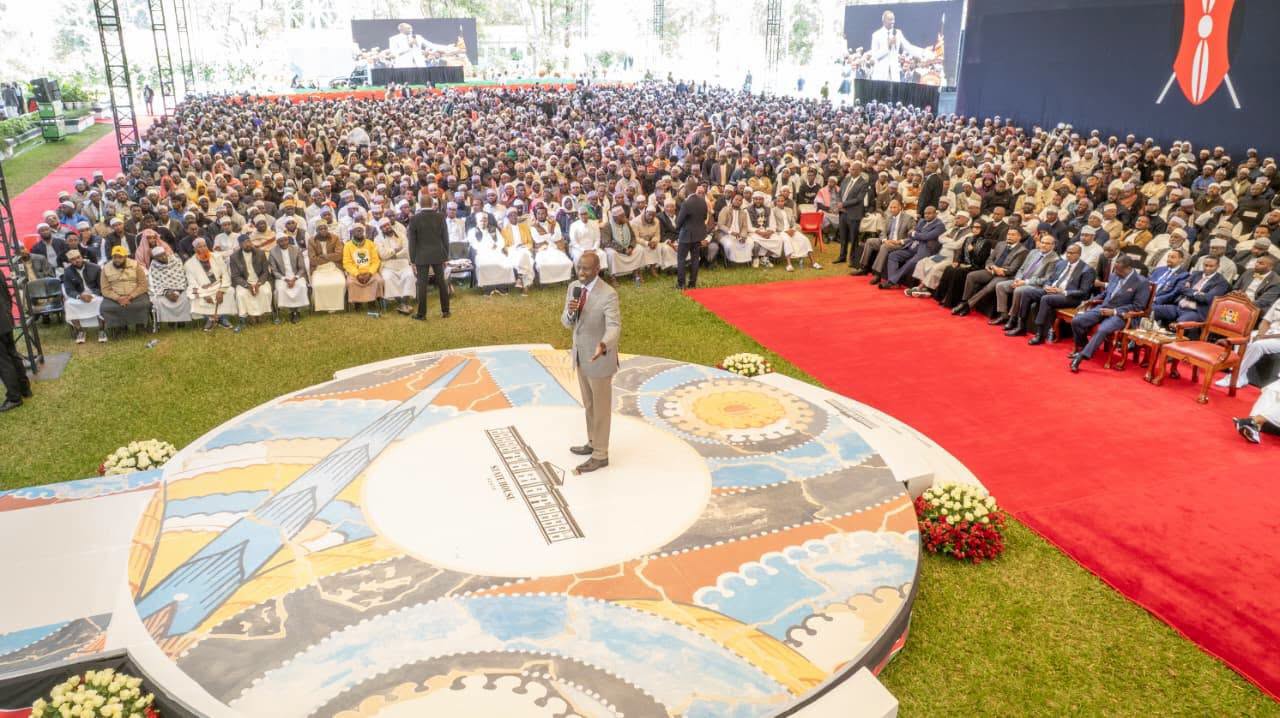
The Government has implemented key pledges it made to the Muslim community during the election campaign in 2022, President William Ruto has said.
The President cited the ending of discriminatory vetting in the issuance of identification cards and advancing inclusion in development.
He pointed out that he signed a presidential proclamation formally ending the decades-old, extra-vetting processes that historically targeted the Muslim population in the border parts of the country.
“We made it clear that all Kenyans, including Muslims and border communities, have a constitutional right to equal treatment in the issuance of national identity cards and passports and that’s what we have done,” President Ruto said.
Speaking at State House Nairobi on Wednesday when he hosted Muslim religious leaders, the President assured them that delayed implementation of the law on Muslim endowment funds (Waqf) will be ready by September 2026.
Wagf refers to charitable assets whose incomes are permanently dedicated to religious and charitable purposes, including education, healthcare, and social services.
Additionally, President Ruto pointed out that the construction of the 750km Isiolo-Mandera road corridor is on course, saying the flagship infrastructure project is designed to link historically marginalised communities in Northern Kenya to major economic markets and essential services.
“This project is one of the many interventions my administration is making to correct historical injustices long suffered by the people of Northern Kenya,” the President explained.
At the same time, he noted that the Government has stabilised the economy over the past four years.
He highlighted key milestones, including low inflation, a stable currency and huge foreign exchange reserves that have risen from $5.7 billion to $15.3 billion.
Explaining where Kenya was four years ago, President Ruto said the Government’s immediate priorities then were to ensure the country withstood global economic shocks and restored confidence in the economy and later embark on a long-term development agenda.